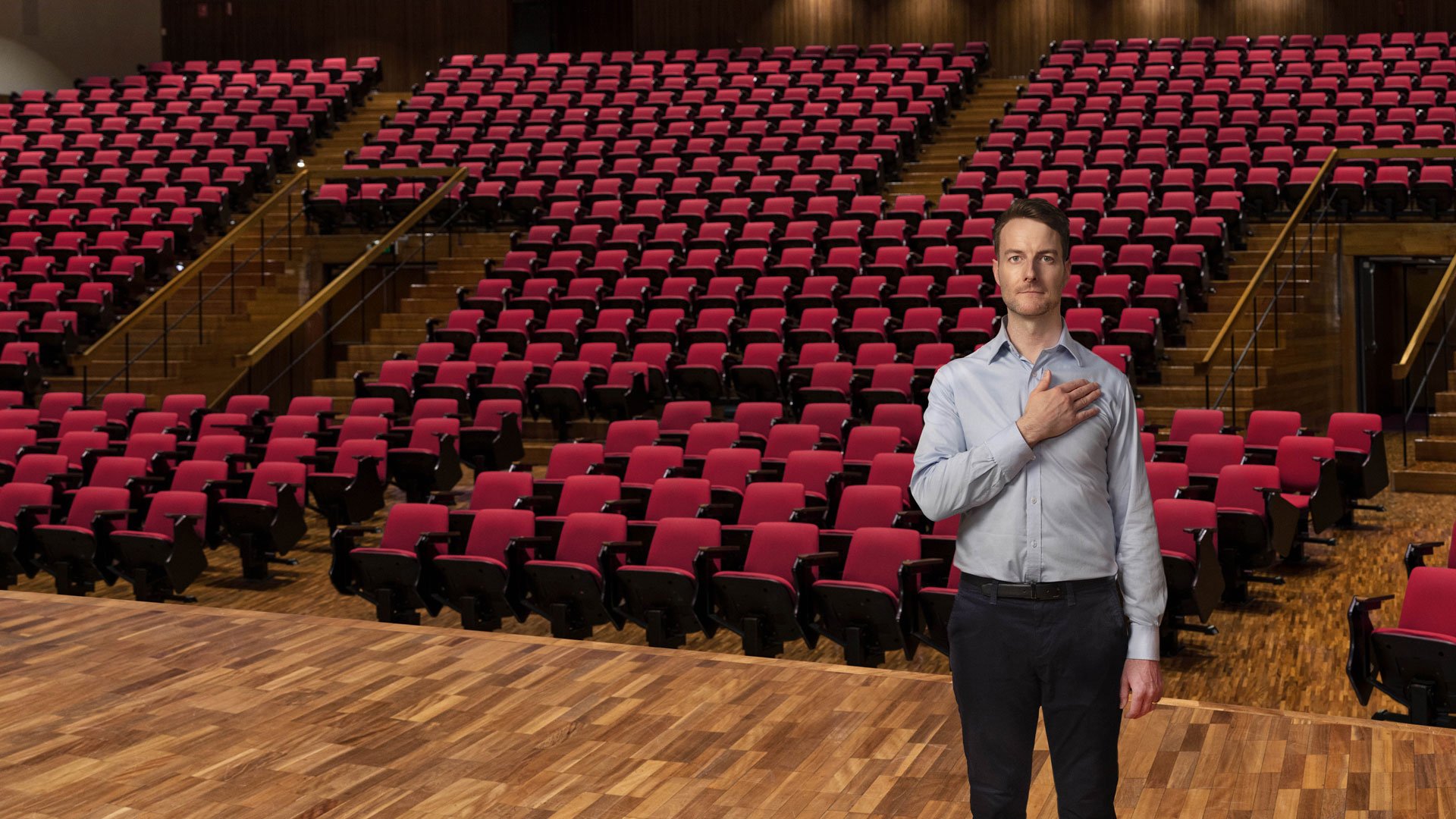
“At 24, the main artery from my heart suddenly tore”
Geoff's story
Dr Geoff Lester brings a unique perspective to conversations about heart health, having experienced cardiovascular disease both personally and professionally. After being diagnosed with a rare heart condition as a young adult and facing significant health challenges, he made a promise to pursue a career in medicine, a goal he has since achieved.
Today, Geoff draws on his experiences both as a patient and a doctor to support and inspire others affected by heart disease. His story is a powerful reminder of the importance of resilience, hope and taking action for your heart health.
I made the decision to turn my economics career on its head and commit to finding out what happened to me and to prevent it from happening to other people.
Geoff Lester
A second chance at life
At 24 years old, Geoff was refereeing a social basketball game when he began feeling dizzy and unwell, with a tingling sensation in his left arm. When the symptoms didn't ease, he went to the emergency department.
While waiting to be seen, a sudden wave of severe chest pain struck. Geoff was rushed for urgent testing, which revealed an aortic dissection, a life-threatening tear in the body's main artery.
Before emergency surgery, doctors urged Geoff to call his family, warning he might not survive. Thankfully, the operation was successful. Since then, he has undergone three more open-heart surgeries but remains focused on staying healthy and making the most of life.
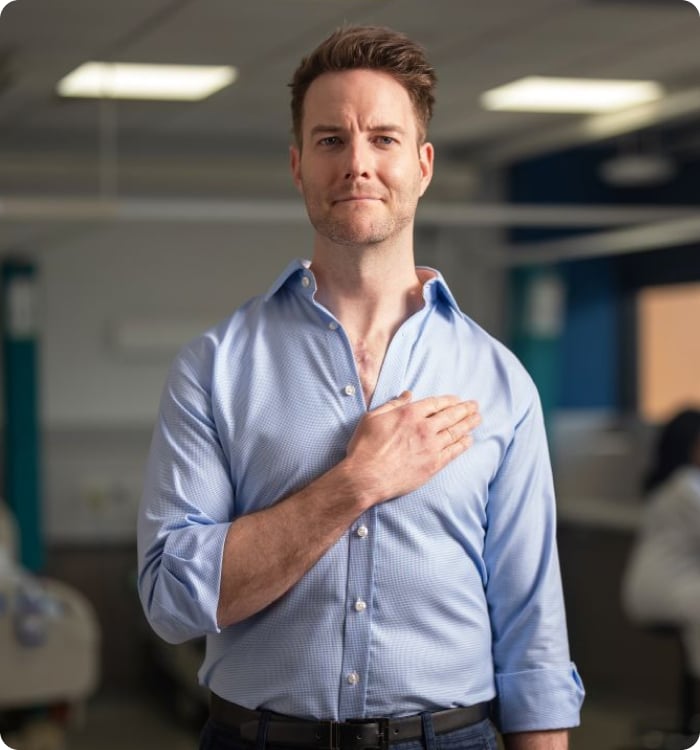
Understanding aortic dissection
An aortic dissection is a rare but life-threatening medical emergency that occurs when a tear develops in the wall of the aorta, the body's main artery. Blood can flow through the tear, causing the layers of the artery wall to separate and disrupting blood flow.
Symptoms can include sudden, severe chest, back or abdominal pain and may be mistaken for a heart attack, making rapid diagnosis critical. High blood pressure is one of the most common risk factors, as it can weaken the wall of the aorta over time.
Knowing the warning signs and managing risk factors such as high blood pressure can help people take positive steps towards protecting their heart and vascular health. Through research, education and awareness, we are working to improve our understanding of conditions like aortic dissection and support better outcomes for people affected by them in Australia.
We're all in
Mandy's story
More information on blood vessels and heart valves
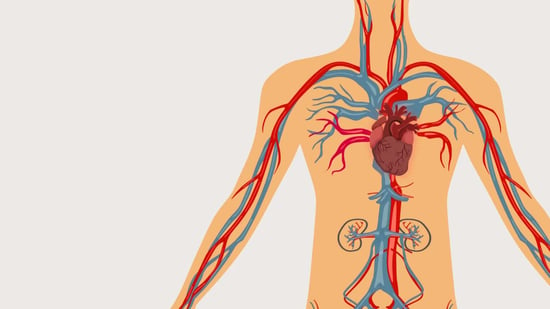
THINK Aorta
THINK Aorta aims to raise awareness and understanding about aortic dissection to improve patient outcomes.
.jpg?width=550&height=auto&format=pjpg&auto=webp)
How your heart works
Chambers, valves, blood vessels and more. Learn more about the structure and function of the heart.

Unlocking new ways to protect our blood vessels
Dr Renjing Liu is investigating how blood vessel disease develops, paving the way for new treatments to keep arteries healthier for longer.
In this advertisement, 'heart disease' is used as a general term for all cardiovascular disease. Statistics are compiled by the Heart Foundation based on data from the Australian Bureau of Statistics (ABS). Causes of Death, Australia.