Nothing beats knowing what to do in a cardiac arrest.
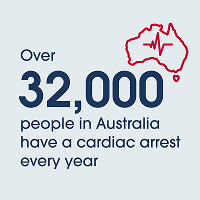
Every 15 minutes, someone living in Australia experiences a cardiac arrest. That’s around 88 people every day.
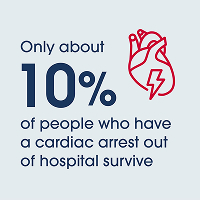
A cardiac arrest can happen to anyone, anywhere and at any time. Research shows that the chance of survival outside of hospital is incredibly low. We can help change this.
By acting quickly and calling Triple Zero (000), pushing for CPR and shocking with an automated external defibrillator (AED), you can help save someone’s life.
What to do if someone is in cardiac arrest
What is cardiac arrest?
Cardiac arrest is an electrical fault in the heart, where the heart stops beating normally. When this happens, blood can’t reach the brain and other important parts of the body.
A cardiac arrest can be deadly if not treated quickly.
Cardiac arrest happens suddenly, and the signs show up straight away.
Someone in cardiac arrest will:
- Collapse and fall down.
- Not wake up or respond when you try to talk to or touch them.
- Not breathe normally or at all – they may gasp, choke, gurgle or sound like they’re snoring.

If you think someone is in cardiac arrest, Call Triple Zero (000) immediately. The call taker will guide you until help arrives.
What is cardiopulmonary resuscitation (CPR)?
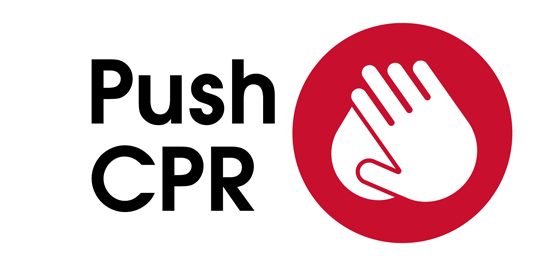
Cardiopulmonary resuscitation, or CPR, involves pushing hard and fast in the centre of a person’s chest to help keep blood and oxygen moving to the brain and other organs when their heart has stopped beating.
It’s a skill anyone can learn. You don’t need to be a health professional to do it.
CPR alone does not restore a normal heart rhythm, but it helps keep the heart in a better state so an AED has a greater chance of working when it is used.

What is an automated external defibrillator (AED)?
What is an automated external defibrillator (AED)?
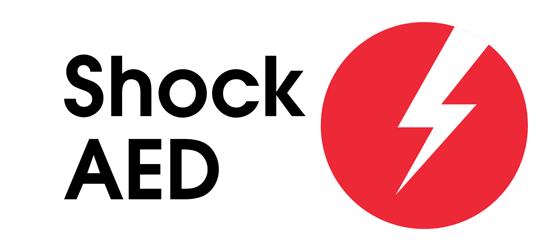
An automated external defibrillator, or AED, is a portable electronic device that detects life-threatening abnormal heart rhythms and delivers an electrical shock to try to restore a normal heart rhythm.
AEDs detect if the heart has a shockable rhythm. They only deliver a shock if required – an AED will not shock someone when a normal heartbeat is detected, or there is no heartbeat at all.
AEDs also give simple step-by-step instructions. This means anyone can use an AED, even if you’ve never seen or used one before.
Meet Anastasia, cardiac arrest responder

The moment I saw the AED, I felt the biggest sense of relief. I heard the machine’s voice talk me through what I needed to do and suddenly I felt back in control.
Anastasia Georgiou
Cardiac arrest responder
While her son Felix was at soccer training, Anastasia Georgiou got the call every parent hopes to avoid: "Mum, they're asking for help." A stranger on a nearby field had collapsed, unresponsive, mid-match.
With Triple Zero on the line, Anastasia and a teammate began CPR and when another player arrived with a public AED, it gave her the confidence to keep going until paramedics arrived. The man survived. Read how a 12-year-old's instinct and an accessible defibrillator made all the difference.
Help us lift cardiac arrest survival rates through Heart of the Nation
Heart of the Nation is the Heart Foundation’s flagship program, working to improve cardiac arrest survival rates through awareness, education, and advocating for improved access to publicly accessible AEDs.
Help us spread the word of this life-saving message, volunteer or register AEDs in your area.


Frequently asked questions
Difference between heart attack and cardiac arrest
A cardiac arrest is very different to a heart attack. During a heart attack, the person is conscious, breathing and can call out for help.
During a cardiac arrest, the person is not conscious, not breathing normally or at all, and cannot cry out for help.
Sometimes a heart attack can lead to a cardiac arrest. If you or someone is having a suspected heart attack, getting help as soon as possible can help prevent a cardiac arrest.
Both heart attacks and cardiac arrests are medical emergencies. Remember to call Triple Zero (000) immediately. The operator will be able to ask questions to determine what is happening and send help.
Why are AEDs important
CPR alone does not restore a normal heart rhythm. It does help keep the heart in a state where the AED has a greater chance of being able to do its job.
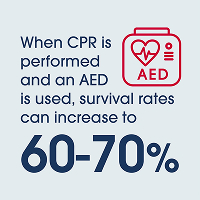
When both CPR is performed and an AED is used within the first 3 to 5 minutes of a cardiac arrest, survival rates can increase to 60-70%.
How am I protected as a responder?
Any resuscitation attempt is better than none. Most states in Australia have civil liability laws that may provide protections to bystanders that perform CPR in good faith and meet certain other conditions. When you call Triple Zero (000), the call taker will guide you through next steps, including CPR if you don’t know what to do.
To learn more about becoming a responder head to:
Can you hurt someone when performing CPR?
Chest compressions are easy and safe. Any attempt at resuscitation, even one that isn’t perfect, is always better than no attempt. Ambulance call takers will be on the phone and can guide you through the process if you need any help. The person you are helping is unconscious and cannot feel any pain.
Do I need formal training to perform CPR?
No, you don’t need formal training to perform CPR. Any attempt at resuscitation is better than none. Just remember, Call, Push, Shock. The Triple Zero (000)-call taker will guide you through CPR. The key is to push hard and fast on the chest.
Can you hurt someone by using an AED?
No, you cannot harm yourself or others by using an AED. An AED automatically analyses the heart’s rhythm and will only deliver a shock to someone if they require it.
Do I need formal training to use an AED?
No, AEDs are designed so that anyone can use them in an emergency. Just turn it on and follow the prompts.