
What is a Heart Health Check?
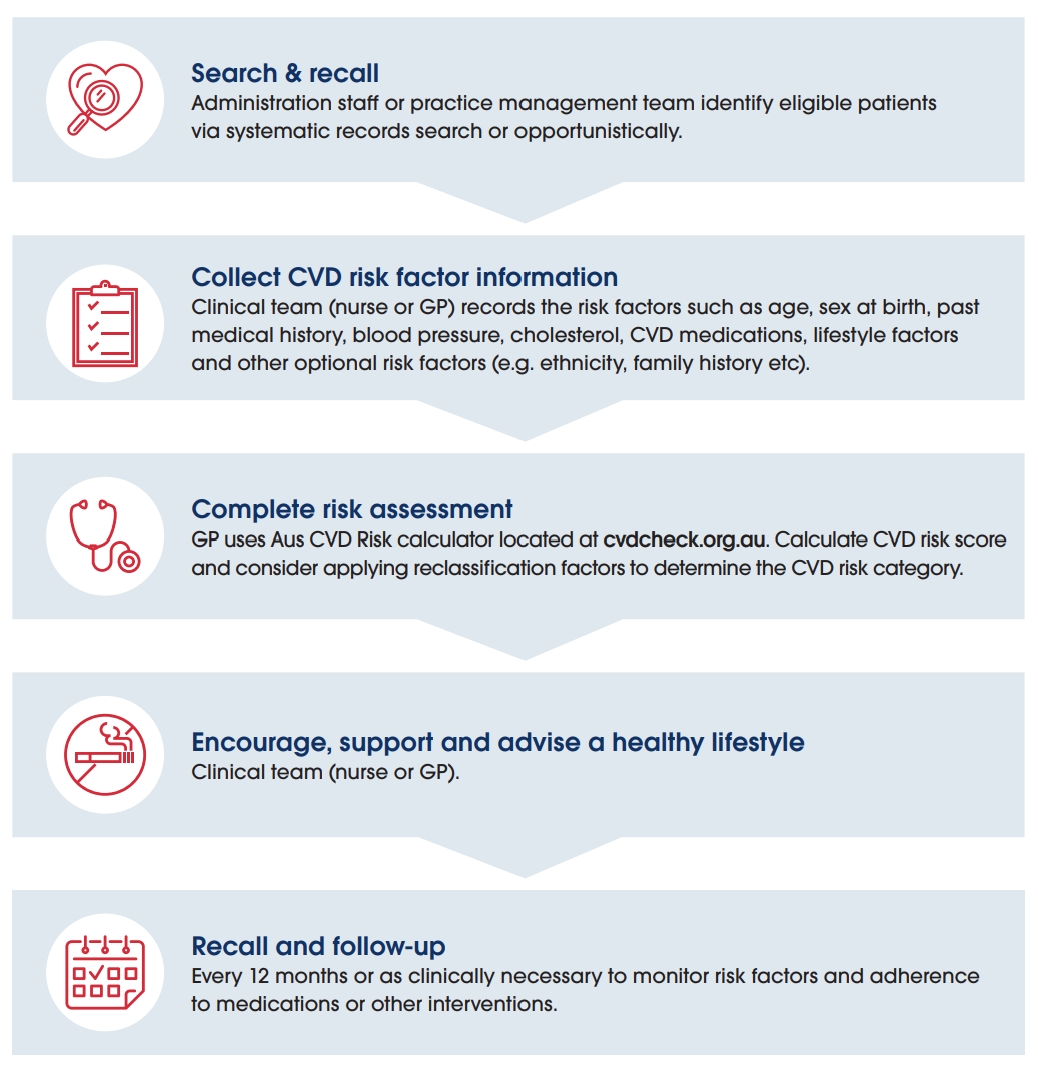
An outline of the assessment and an implementation flowchart
A Heart Health Check (MBS item number 699 and 177) is the patient-friendly term for a comprehensive CVD risk assessment and ongoing management plan for people who do not have CVD.
Eligibility
- Age ranges for assessing CVD risk in people without known CVD:
- All people aged 45–79 years
- People with diabetes aged 35-79 years
- First Nations people aged 30–79 years (assess individual CVD risk factors in First Nations people aged 18–29 years)
Consultation time
- At least 20 minutes
Risk assessment
Use the Aus CVD Risk calculator with the following variables:
- Age
- Sex at birth
- Smoking status
- Systolic blood pressure
- Total cholesterol to HDL cholesterol ratio
- Use of CVD medicines
- Postcode (optional)
- History of atrial fibrillation (optional)
- Diabetes status (with specific diabetes variables)
Identify CVD risk category
Estimated 5-year CVD risk will fall into one of the following categories:
- High risk: ≥ 10%
- Intermediate risk: 5% to 10%
- Low risk: < 5%
Consider reclassification factors
- Ethnicity and First Nations people
- Family history of premature CVD
- Chronic kidney disease
- People living with severe mental illness
- Coronary artery calcium score.
More guidance on the reclassification factors and other risk considerations are available in the Aus CVD Risk calculator and the Australian Guideline for assessing and managing CVD risk. Visit cvdcheck.org.au to learn more.
Other risk considerations
- History of hypertensive disorders and/or pre-eclampsia, gestational diabetes during pregnancy
Interventions
- Communicate risk and options for management with the person
- Encourage, support and advise a healthy lifestyle
- Recommend interventions and referrals to support lifestyle changes
- Prescribe blood-pressure lowering and lipid-modifying pharmacotherapy where appropriate
- In collaboration with the person being assessed, implement a plan for management and assessment of individual risk factors.
Follow-up
- Implement reminder system to recall patients where clinically necessary.
How often can this be claimed?
- A Heart Health Check (MBS item 699 or 177) can be claimed once per patient in a 12‑month period.
- Items 699 and 177 cannot be claimed if another Medicare health assessment (e.g. items 701, 703, 705 or 707) has been claimed in the previous 12 months.
- Item 715, a health assessment for a First Nations person, does not prevent a Heart Health Check from being claimed within the same 12‑month period, where clinically appropriate.
- Item 699 or 177 can be co-claimed with other eligible items to support patient management. Examples include:
- Bulk-billing: Items 699 or 177 may be co-claimed with items 10990 or 10991, where eligible.
- Chronic disease management (CDM): For people living with a chronic condition and require a CDM plan, items 699 or 177 may be claimed in conjunction with eligible CDM items.
Schedule fee (as of July 2026)
- 699: Fee = $87.10. Benefit = 100% rebate
- 177: Fee = $69.70. Benefit = 100% rebate
Visit mbsonline.gov.au for full details on the Heart Health Check item descriptions, explanatory notes and schedule fees.



Aus CVD Risk calculator
First Nations people and the Heart Health Check
Last updated26 October 2026
Last reviewed08 July 2024